 FACULTY OF EXACT AND NATURAL SCIENCES
 FACULTY OF HUMANITIES
 FACULTY OF SOCIAL AND POLITICAL SCIENCES
 FACULTY OF PSYCHOLOGY AND EDUCATIONAL SCIENCES
 FACULTY OF ECONOMICS AND BUSINESS
 FACULTY OF MEDICINE
 FACULTY OF LAW




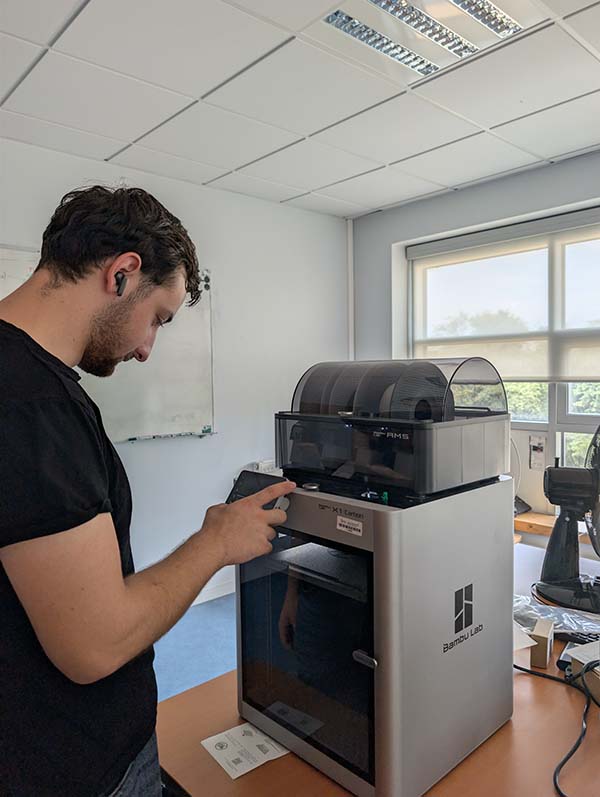
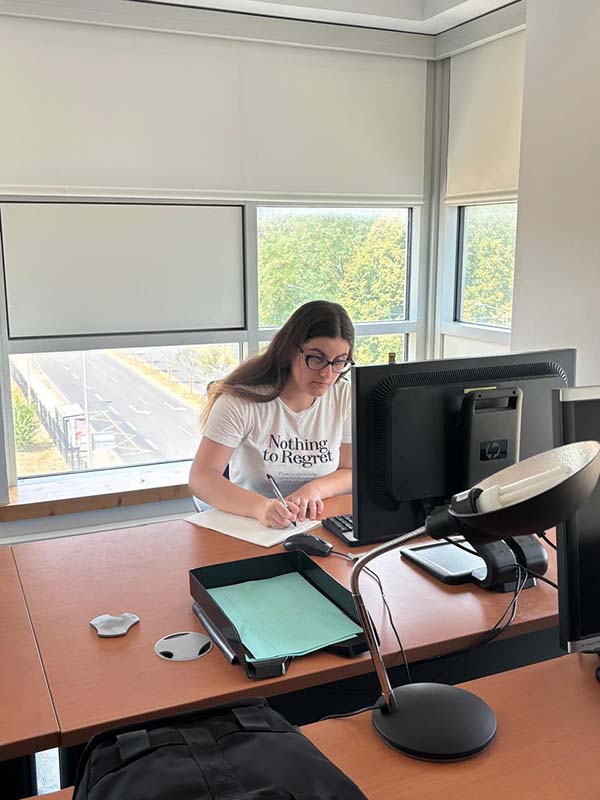
Bichiko Gularashvili, Nikoloz Burduli and Tamar Bardzimadze, students of the Georgian-French Bachelor’s Program in Computer Science of the Faculty of Exact and Natural Sciences at TSU, successfully implemented and presented the FaceConnect project at the IBISC (Informatics, Bioinformatics, Complex Systems) research laboratory at the University of Paris-Saclay and the University of Evry Val d'Essonne in France.
In the final year of the bachelor’s program, French professors come to TSU to deliver lectures. Students often travel to Evry University for a semester, and upon completion of the program, graduates receive a double diploma: a Bachelor’s degree in Computer Science from TSU and a Bachelor’s degree in Informatics from Evry University.
As part of the FaceConnect project, Georgian students created a unified system based on biometric recognition that allows users to securely control various “smart” devices, including electronic locks and lighting, using facial recognition. One of the project’s main goals was to create a reliable technological environment and protect users’ personal data. The students’ work was supervised by Nazim Agoulmine, a professor at the University of Paris-Saclay.
Tamar Bardzimadze, a project participant, explains that the FaceConnect system is a unified system for biometric authentication and management of connected devices. The project’s goal was to create a secure technological environment in which users can control various “smart” devices using facial recognition. One of the system’s main advantages is the enhanced protection of personal data. Facial recognition and user identification are performed directly on the user’s mobile phone. Accordingly, biometric data is neither sent over the Internet nor stored on an external server or in cloud storage.
The components created within the project were developed by students and combined into a single system comprising three main components: the mobile application, which was created for Android, recognizes the user’s face in real time. To enhance security, the system uses a blink detection function to prevent deception with a photo or video recording of the application.
The central control device is a Raspberry Pi-based system that receives requests from the mobile application, checks the user’s authorization and sends corresponding commands to connected devices.
Students created two working prototypes of “smart” devices: a “smart” lock that can be opened and closed using a mobile application and a “smart” lighting system that can be turned on and off remotely. Both devices have individual authorization data and a protected communication channel. In the event of a connection loss, the system automatically switches to secure mode. While assembling physical devices for full-scale testing of the system, the team also created virtual simulators. With these simulators, the students pre-tested the interaction between the mobile application, the central control system and the “smart” devices. The simulation allowed them to test every stage of the system, from user recognition and authorization to sending commands to the device. The project was carried out using a modern team methodology. The students divided the work tasks into stages and used the GitHub platform to develop software code together.
“Working on this project with Professor Nazim Agoulmine provided each team member with a unique practical experience. Throughout the implementation process, we successfully mastered the latest biometric technologies and complex Internet of Things (IoT) communication standards. This combination of theoretical knowledge and engineering practice creates a solid foundation for our future professional and academic development. We would like to express our immense gratitude to the IBISC laboratory, the University of Evry, and TSU for this opportunity and for offering similar international programs,” said the TSU student team working on the project.
.jpg)
.jpg)



.jpeg)
 (1).jpg)